
When cable started feeling outdated
Across Canada, more people are quietly moving away from traditional cable. The bills keep rising, the equipment feels old, and honestly, many viewers just want something simpler. That’s usually when someone first hears about primo iptv.
In basic terms, primo iptv lets you stream television using your internet connection instead of a cable box. Once it’s set up on a smart TV, streaming device, or tablet, the content loads directly through the web.
Many viewers discover that primo iptv offers a more flexible way to watch sports, movies, kids programs, and live events without dealing with rigid television contracts.
If you want to explore a real example of how this kind of streaming service looks in practice, you can take a quick look at the main platform on the official IPTV home page to see how modern internet television is presented today.

The quiet TV shift happening in Canadian homes
If you talk to friends across Canada lately, you’ll notice something interesting. Fewer people are excited about traditional cable anymore. Bills kept increasing, channel choices barely changed, and that old receiver under the television started to feel outdated. That’s usually the moment someone discovers iptv.
Instead of relying on broadcast cables or satellite dishes, primo uses the internet connection already running in your home. Once it’s connected to a smart TV, streaming device, or tablet, the entire viewing experience changes. Content loads quickly, categories are organized clearly, and switching channels feels surprisingly smooth.
For many households, primo simply feels more modern. No technician visits. No complicated hardware. Just internet streaming that works across multiple devices.
Why people are curious about primo iptv
There isn’t just one reason people try iptv. It’s usually a mix of small frustrations with traditional television that eventually push viewers to explore something different.
A few things people often notice:
• Monthly TV bills suddenly become much lighter
• Access to a broader mix of entertainment categories
• The freedom to watch on smart TVs, phones, tablets, or streaming sticks
• No long contracts forcing you to stay for years
• Clear high-definition picture quality on modern screens
These small changes make primo feel surprisingly refreshing compared to older broadcast systems.
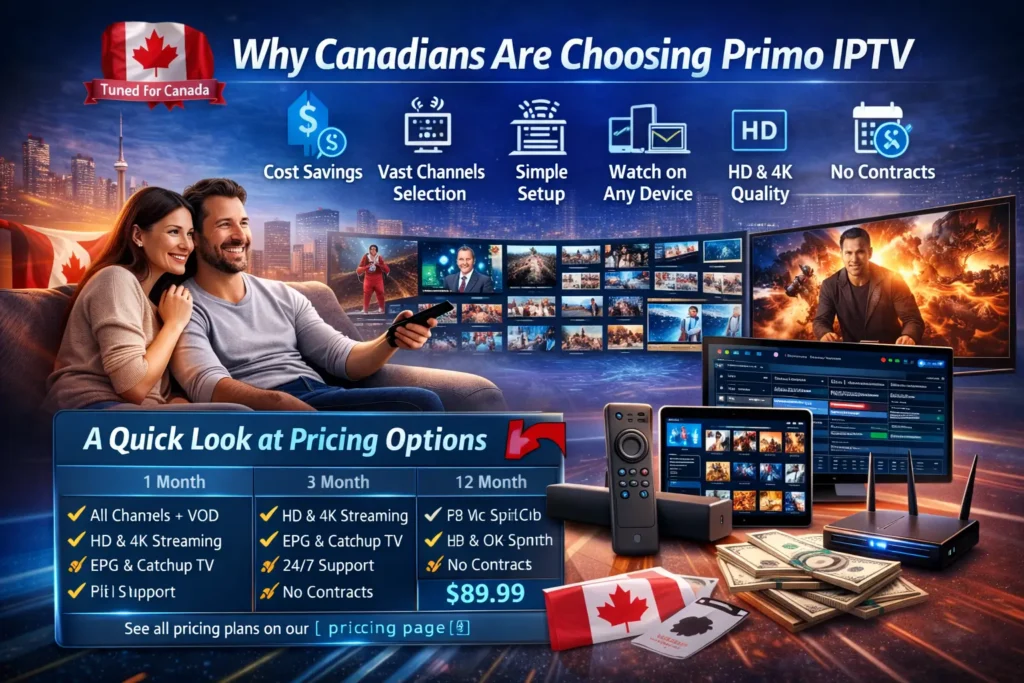
A quick look at pricing options
Another reason viewers become curious about primo iptv is the pricing structure. Instead of expensive long-term bundles, streaming subscriptions are often simple and flexible.
| Plan | Access Duration | Price |
|---|---|---|
| Starter Plan | 1 Month | 10.99€ |
| Standard Plan | 3 Months | 23.99€ |
| Extended Plan | 6 Months | 34.99€ |
| Full Year Plan | 12 Months | 49.99€ |
Many users start with a shorter plan just to test how primo iptv performs on their device. Once they see how stable the streams are, longer subscriptions usually become the preferred choice.
If you'd like to explore the full subscription breakdown, you can check the detailed plans on the complete IPTV pricing page.
What actually happens behind the scenes
Even though primo feels simple from the viewer’s perspective, the technology behind it is surprisingly clever. Television content is converted into digital data and delivered through high-speed internet networks rather than broadcast towers.
That approach allows iptv to stream programmes directly to compatible devices. Smart TVs, Android TV boxes, Firestick devices, tablets, and smartphones can all handle the system without needing additional receivers.
The result is a smoother viewing experience where switching channels, browsing categories, and loading content happens much faster than many traditional systems.
What makes primo stand out for many viewers
After spending some time with primo, users often notice a few details that make the experience feel different.
Channel categories are typically organized clearly, helping viewers find content without endless scrolling. Electronic programme guides show upcoming broadcasts, which makes planning what to watch much easier.
Streaming quality is another highlight. With a stable internet connection, iptv can deliver crisp HD and even 4K picture clarity on supported devices. For modern televisions, that difference is noticeable almost immediately.
All of these small details combined explain why primo gaining attention among viewers looking for a more flexible way to watch television.

Devices that run primo iptv without complications
One thing people quickly appreciate about primo iptv is that it does not force you to buy special hardware. Most households already have at least one compatible device at home. Once the app is installed, iptv simply connects through the internet and loads the channels.
The platforms most viewers use are usually these:
- Smart TVs and Android TV
Modern televisions already support IPTV applications. After installing a compatible player, primo iptv runs directly on the big screen with the remote control. - Amazon Firestick devices
A Firestick plugs into the HDMI port of almost any TV. Once connected to Wi-Fi, it becomes a compact streaming device that handles primo iptv very smoothly. - Smartphones and tablets
Many viewers open primo iptv on their phone or tablet when they are away from the television. The interface is almost identical to the TV version. - Laptops and desktop computers
Some users prefer watching primo iptv on a computer screen, especially when browsing channels or testing playlists.
Popular apps people use with primo iptv
Most IPTV services rely on external players to load channels and video libraries. These apps organize the interface, programme guide, and streaming categories.
Some of the most commonly used players include:
• IPTV Smarters Pro
• TiviMate
• IBO Player
• SmartOne IPTV
Each of these applications can connect to primo using either playlist links or account credentials.
Simple steps to install primo iptv on most devices
Setting up primo iptv usually takes only a few minutes. The process looks almost the same across different devices.
Step 1 – Install an IPTV player
Download an IPTV player such as IPTV Smarters Pro, TiviMate, IBO Player, or SmartOne IPTV from your device's app store.
Step 2 – Open the application
Launch the player and navigate to the login or playlist section where IPTV accounts are added.
Step 3 – Choose a login method
Most players allow two ways to connect:
• M3U playlist link
• Xtream Codes login credentials
Both methods load the full primo iptv channel list automatically.
Step 4 – Load channels
After entering the details, the player synchronizes with the server and primo iptv categories appear inside the interface.
Step 5 – Organize favourites
Once everything loads, users often create favourite lists so that primo iptv opens directly to their most watched channels.
Understanding M3U playlists and Xtream login
These two connection methods are what allow primo iptv to communicate with IPTV apps.
• M3U playlists contain a structured list of streaming channels that the app reads and organizes.
• Xtream login systems connect directly to the server and automatically generate categories, programme guides, and video libraries.
If you want a deeper explanation of how playlist connections work inside IPTV players, this article explaining how IPTV M3U playlists function walks through the process in a clear way.
Once the connection is complete, primo usually organizes channels into sections such as sports, movies, kids programming, documentaries, and international broadcasts, making navigation much easier for everyday viewing.

Small adjustments that make primo iptv stream much smoother
After people start using Primo, the next question usually appears pretty quickly: how do you keep the stream running perfectly without buffering or freezing? The truth is that a few simple adjustments can make iptv feel dramatically smoother.
Most experienced users focus on three things first: internet stability, the IPTV player they choose, and how they organize channels inside the app.
Internet quality matters more than people think
A stable connection is the foundation of a smooth primo experience. Even the best IPTV service will struggle if the network is unstable.
Here is a quick reference most users follow:
| Streaming Quality | Recommended Internet Speed |
|---|---|
| Standard HD viewing | 10 Mbps or higher |
| Full HD streaming | 15–20 Mbps |
| 4K streaming quality | 25 Mbps or more |
Whenever possible, many viewers connect their device directly to the router using an Ethernet cable. This often makes primo iptv streams much more stable compared with weaker Wi-Fi signals.
Choosing the IPTV player that fits your device
Another factor that strongly affects primo performance is the application used to load the streams. Different IPTV players offer different interfaces and playback engines.
Some apps that many users rely on include:
• IPTV Smarters Pro
• TiviMate
• IBO Player
• SmartOne IPTV
These players connect easily to iptv using either M3U playlist links or Xtream login credentials. A well-optimized player can make navigation faster and help channels load more reliably.
Organizing channels makes daily viewing easier
Once primo loads inside the app, most players automatically group channels into categories. But users often improve the experience further by creating custom favourite lists.
A few small habits help a lot:
• Add frequently watched channels to a favourites section
• Hide categories you rarely watch
• Keep sports, movies, and documentaries separated
Doing this helps iptv open directly to the channels you care about instead of scrolling through long lists.
When a stream freezes, these quick fixes usually help
Even with a strong connection, occasional streaming glitches can appear. Most iptv users fix them quickly with simple checks.
• Restart the IPTV player
• Refresh the playlist or account login
• Restart the device or streaming stick
• Verify the internet connection is stable
These quick resets usually restore primo streams within seconds.
If you want to understand more about how IPTV streaming works in general, this detailed explanation of what IPTV technology actually is provides a deeper overview of the system behind services like primo iptv.
A final thought before choosing your setup
For many viewers, iptv becomes a long-term replacement for traditional television simply because it adapts easily to different devices and viewing habits. Once the internet connection, IPTV player, and channel organization are configured correctly, the entire experience tends to run smoothly.
That flexibility is exactly why primo continues gaining attention among viewers looking for a more modern way to watch television.
Frequently asked questions people often have about primo iptv
Below are some of the questions that usually come up when someone first hears about primo iptv. Instead of complicated technical explanations, these answers focus on what most viewers actually want to know before trying primo themselves.
What exactly is primo iptv and how does it work?
In simple terms, primo delivers television streams through the internet rather than through satellite signals or cable infrastructure. The video signal is converted into digital data and delivered directly to compatible devices. Once the IPTV app connects to the service, iptv loads channel categories, programme guides, and video libraries automatically.
Why are more Canadian viewers trying primo iptv instead of cable?
Many viewers say the biggest advantage of iptv is flexibility. Instead of fixed channel bundles, users explore a wider selection of live programming, movies, documentaries, kids content, and international broadcasts. Another reason people consider primo is the ability to watch content on multiple devices without needing extra hardware installations.
How do you start using primo on a device?
Most setups begin by installing an IPTV player. Applications such as IPTV Smarters Pro, TiviMate, IBO Player, or SmartOne IPTV can connect to primo using login credentials or playlist links. After the connection is added, the app synchronizes with the server and primo iptv channels appear inside the interface.
What is the difference between an M3U playlist and Xtream login?
These are simply two ways of connecting IPTV apps to primo.
• M3U playlists contain a long structured list of streaming channels.
• Xtream login credentials connect directly to the server and automatically organize categories, programme guides, and video libraries.
Many viewers prefer Xtream login because it loads primo iptv channels with a cleaner interface inside most IPTV players.
Can primo iptv run on Firestick or Android devices?
Yes. primo iptv works very well on Amazon Firestick, Android TV boxes, and Google TV systems. These devices install IPTV apps easily, which makes connecting primo quick and convenient.
Is primo iptv compatible with Smart TVs?
Absolutely. Many Smart TVs allow IPTV applications to be installed directly from their app stores. Once the app is installed, users simply add their login details and primo begins loading channels through the internet connection.
How can someone improve primo iptv streaming quality?
Most viewers get the best results when primo runs on a stable internet connection. A wired Ethernet connection often provides the smoothest playback. Choosing a reliable IPTV player and clearing the app cache occasionally can also help maintain stable primo streaming.
Where can beginners learn more about IPTV before getting started?
For anyone who wants a deeper explanation of how streaming television systems function, this helpful guide explaining how IPTV services work in detail gives a clear overview of the technology behind platforms such as primo iptv.
