
The Shift From Cable to Modern Streaming in Canada
Traditional television setup is changing across the Great White North. Many residents now look for flexible ways to stream their favourite shows without long-term contracts. IPTV Pro offers a modern alternative to expensive cable packages, giving viewers more control over what they watch and when they watch it.
Instead of relying on satellite dishes or bulky hardware, IPTV Pro uses your high-speed internet to deliver live channels and on-demand movies directly to your device. This approach provides a seamless experience for households that want high-quality entertainment without technical complications.
As streaming demand continues to grow, IPTV Pro Canada users are prioritizing stability, 4K capability, and multi-device compatibility. Services backed by reliable infrastructure—such as providers featured on Best Canada IPTV—are becoming increasingly popular among cord-cutters.
This guide explores how the system functions, what makes it efficient, and why IPTV Pro is becoming a strong option for Canadian viewers in 2026.

Why More Canadians Are Switching (And What They Notice First)
Something interesting is happening across Canada. People are not just cancelling cable — they are replacing it with smarter streaming systems. And that’s where IPTV Pro starts making sense.
The first thing users notice isn’t “more channels.” It’s control.
With IPTV Pro, you’re not tied to a single box in the living room. You can move between devices. You can switch from live TV to on‑demand instantly. You can watch in the basement, bedroom, or even while traveling.
That shift alone changes how television fits into everyday life.
What Actually Makes IPTV Pro Different?
Instead of relying on broadcast towers or satellite dishes, IPTV Pro uses internet protocol delivery. That means:
• No external dish installation
• No weather signal interruptions
• Faster channel switching
• Digital content management
Traditional cable pushes content one way. IPTV Pro works more like a smart streaming ecosystem. Content is delivered through optimized servers, processed digitally, and streamed directly to your device in real time.
How Content Moves From Server to Screen
Here’s a simplified breakdown of what happens when you press “play”:
- Content is pulled from licensed distribution feeds.
- It’s encoded for efficient streaming.
- High-performance servers distribute the stream.
- Your app decodes and displays it instantly.
This is why IPTV Pro can support live TV, sports events, and large on‑demand libraries within the same interface.
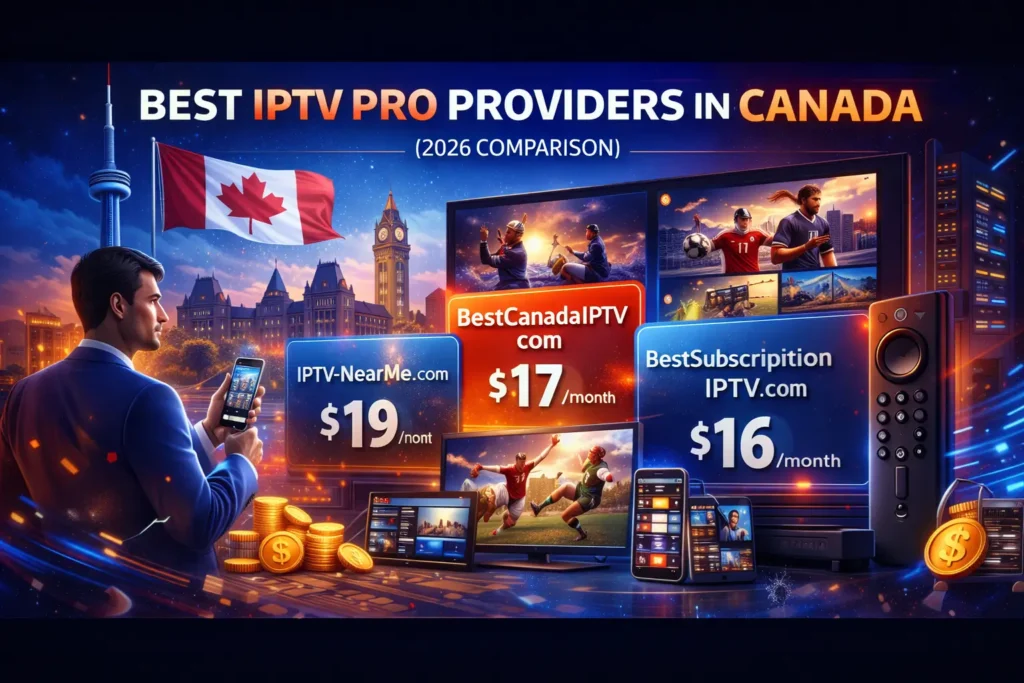
Best IPTV Pro Providers in Canada (2026 Comparison)
Choosing the right provider is just as important as choosing the right device. Server quality, pricing transparency, and regional infrastructure all impact your long‑term streaming experience.
Below is a direct comparison of three active platforms frequently considered by Canadian users.
| Provider | Starting Price | Key Strength | Best For |
|---|---|---|---|
| BestCanadaIPTV.com | From $9.99/month | Strong Canadian server coverage + 4K support | Households wanting stable multi-device access |
| IPTV-NearMe.com | From $10/month | Flexible regional streaming options | Users looking for location-focused access |
| BestSubscriptionIPTV.com | From $10.43/month | Competitive pricing with broad channel variety | Budget-conscious streamers |
What To Compare Beyond Price
Price alone doesn’t determine value. Before subscribing, check:
• Server uptime during peak evening hours
• Trial availability
• Device compatibility
• Refund transparency
• Support response time
If you're specifically comparing structured plan options and activation timelines, reviewing the official pricing breakdown helps clarify what’s included in each tier.
The strongest providers focus on infrastructure first — marketing second.
The Real Benefits Canadians Care About in 2026
| Feature | Why It Matters |
|---|---|
| Multi-device access | Watch anywhere in your home |
| 4K support | Sharper sports and movies |
| Stable servers | Less buffering during peak hours |
| Flexible plans | No long-term contracts |
Beyond features, users look for transparency. Pricing clarity matters. You can compare plan structures directly on the official pricing page to see how packages are structured.
For deeper comparisons between providers and streaming systems in Canada, you may also explore detailed breakdowns in related guides such as Canada IPTV Providers.
When IPTV Pro is implemented correctly, it doesn’t feel technical. It feels natural, like television finally adapted to how Canadians actually live.
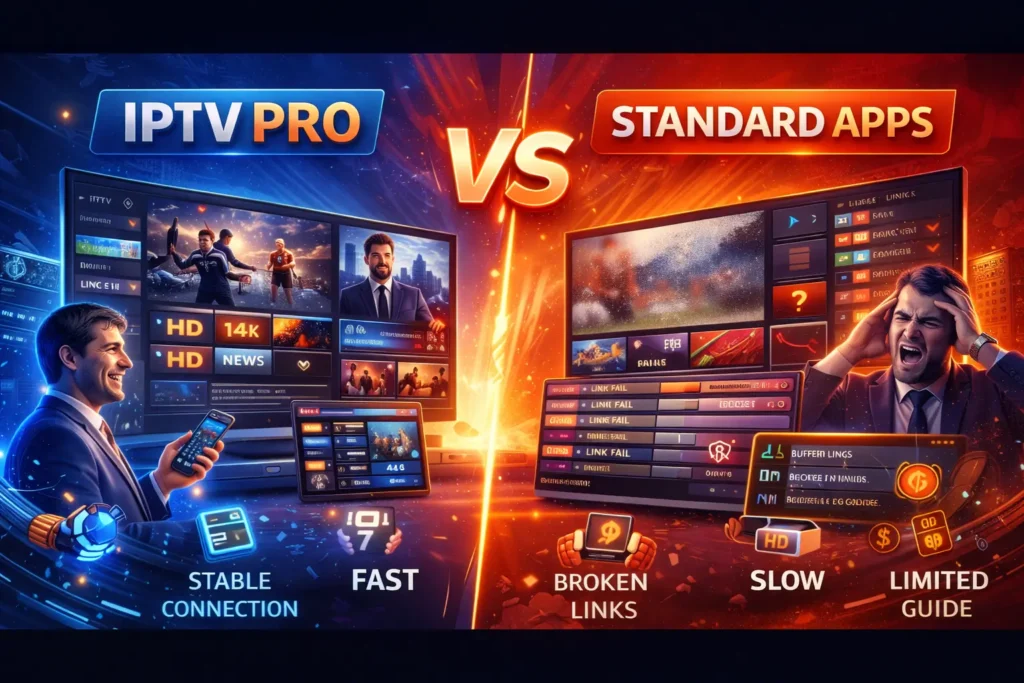
IPTV Pro vs Standard Apps – Where the Difference Really Shows
Not all streaming apps are built the same. On the surface, many platforms look similar. But once you use them during peak evening hours, the gap becomes obvious. IPTV Pro is structured differently from basic IPTV applications, and that difference shows in performance, organization, and long‑term reliability.
1. Stability That Holds Under Pressure
The biggest separation point is infrastructure. IPTV Pro operates on optimized, high-capacity servers designed to handle heavy traffic across Canada. Standard apps often rely on shared or overloaded systems.
What this means in practice:
• Fewer interruptions during live sports
• Faster channel switching
• Consistent HD and 4K output
• Reduced buffering during prime time
IPTV Pro is built with redundancy systems, meaning backup servers automatically support the stream if traffic spikes. That layer of protection is rarely found in entry-level apps.
2. Channel Depth and Content Organization
Quantity alone isn’t enough. Structure matters. IPTV Pro delivers a well-categorized lineup including local Canadian channels, international content, and updated on-demand libraries.
Instead of a cluttered list, users get organized sections and searchable categories. You can preview the type of content typically included by reviewing the official channel list.
IPTV Pro also refreshes content libraries more frequently than many generic platforms, keeping the experience current.
3. Interface That Feels Modern
A premium solution should feel smooth from the moment you open the app. IPTV Pro focuses on:
• Clean layout design
• Built-in EPG guide
• Custom favorites lists
• Fast search functionality
These small details add up. IPTV Pro doesn’t just stream content — it organizes it in a way that feels intuitive.
For step-by-step configuration across Smart TV, Firestick, or Android devices, users can follow the official installation tutorial.
Why the Premium Model Matters in 2026
As streaming competition increases, IPTV Pro positions itself as a long-term solution rather than a temporary app. Stability, structured navigation, and consistent performance are what separate IPTV Pro from standard IPTV applications.
For Canadian viewers who expect reliability without technical headaches, IPTV Pro represents the upgraded experience.
Streaming Quality That Matches Canadian Expectations
When people invest in IPTV Pro, they usually ask one thing first: “Will the picture actually look good on my TV?” Fair question. The answer depends on two things — resolution and internet stability.
IPTV Pro supports HD, Full HD, and true 4K output. But the experience isn’t just about pixel numbers. It’s about how smoothly those pixels move during live sports, fast scenes, or high-action broadcasts.
Resolution Explained Without the Tech Confusion
Here’s what those quality labels really mean in everyday use:
| Quality Level | Resolution | Best For |
|---|---|---|
| HD | 1280×720 | Smaller TVs, secondary rooms |
| Full HD | 1920×1080 | Living room viewing |
| 4K | 3840×2160 | Large screens and premium setups |
With IPTV Pro, users can manually adjust quality based on their connection. That flexibility prevents unnecessary buffering when bandwidth fluctuates.
Bandwidth Reality in Canada
Internet infrastructure varies across provinces. Downtown Toronto and Vancouver often offer fiber connections well above 100 Mbps. Rural Alberta or Northern regions may rely on slower DSL or satellite networks.
To keep IPTV Pro running smoothly:
• HD streaming works comfortably from 10 Mbps.
• Full HD performs best around 20–25 Mbps.
• 4K streaming is most stable above 50 Mbps.
While IPTV Pro can technically run on lower speeds, stability improves significantly with consistent bandwidth rather than just high peak numbers.
Why Stability Matters More Than Raw Speed
Even with fast internet, performance can drop during peak hours when multiple devices share the same connection. IPTV Pro is optimized for efficient data delivery, but home network quality still plays a role.
Wired Ethernet connections almost always outperform Wi‑Fi for IPTV Pro setups. If you're serious about 4K viewing, this small change makes a noticeable difference.
For a deeper technical breakdown of how streaming systems operate in Canada, you can review this detailed guide on IPTV service explained.
When configured correctly, IPTV Pro delivers consistent HD and 4K quality that rivals traditional broadcast clarity — without the hardware limitations.

Why Stability Beats Just “Fast Internet” Every Time
A lot of people focus only on Mbps numbers. But speed alone doesn’t guarantee smooth streaming. What truly protects your viewing experience is consistency.
Even with high download speeds, issues like latency, jitter, or packet loss can interrupt playback. That’s when you see random buffering circles during live sports or sudden drops in video clarity.
For households using IPTV Pro across Canada, a balanced connection matters more than peak speed tests. A stable 50 Mbps connection will outperform an unstable 150 Mbps line every time.
What improves stability instantly:
• Using Ethernet instead of Wi-Fi
• Restarting your modem periodically
• Avoiding heavy downloads during live events
• Choosing a provider with optimized Canadian servers
The combination of solid infrastructure and home network optimization is what keeps streaming smooth during peak evening hours.
Device Compatibility – Stream On What You Already Own
One of the strongest advantages of IPTV Pro is flexibility. You’re not forced to buy specialized hardware. Most modern devices support it.
Here’s how it works across platforms:
| Device Type | Supported | Installation Method |
|---|---|---|
| Samsung / LG Smart TV | Yes | App Store download |
| Android Smart TV | Yes | Google Play Store |
| Amazon Firestick | Yes | App install or sideload |
| Android TV Box | Yes | Play Store / APK |
| iPhone / iPad | Yes | App Store |
| Windows / Mac | Yes | Browser or media app |
Smart TVs
On Samsung, LG, or Android-based televisions, simply download the compatible app, enter your login details, and start streaming. Setup usually takes under five minutes.
Amazon Firestick & Fire TV
Firestick remains one of the most popular devices in Canada. Installation is straightforward, and performance is strong when connected via Ethernet adapter.
Android TV Boxes
These are ideal for users who want extra performance control and app customization.
Mobile & Desktop Devices
For users who travel or want flexibility, streaming works smoothly on smartphones, tablets, and laptops.
If you need step-by-step guidance for any device, you can follow the official installation tutorial.
When stability and compatibility align, IPTV Pro becomes a reliable long-term solution rather than just another streaming experiment.
From Purchase to First Stream – A Clean Activation Walkthrough
Getting everything running is easier than most people expect. The key is following the right order instead of rushing through setup screens.
Below is a practical activation flow that works smoothly across Canada.
Step 1 – Choose the Right Subscription Plan
Before installing anything, select a provider and confirm:
• Server stability in your region
• HD / 4K support
• Multi‑device access
• Clear renewal terms
If you're unsure about plan details or activation timelines, reviewing the official FAQ section can clarify common questions before purchase.
Step 2 – Secure Your Login Credentials
After subscribing, you’ll receive:
• Username
• Password
• Either an M3U URL or API login details
Store this information safely. Incorrect typing during login is one of the most common causes of activation errors.
Step 3 – Install the App on Your Device
Installation depends on your device type:
| Device | Where to Install From |
|---|---|
| Android TV / Box | Google Play Store |
| Firestick | App Store or Downloader |
| iPhone / iPad | Apple App Store |
| Smart TV | TV App Store |
| Windows / Mac | Compatible media player |
Download the correct app version for your device. Avoid unofficial or modified versions.
Step 4 – Enter Your Access Details
Open the application and choose one of the login options:
• M3U playlist upload
• Username + password (API login)
Make sure there are no extra spaces before or after copied links. Small formatting mistakes often cause loading failures.
Step 5 – Optimize Playback Settings
Before watching your first channel, adjust these settings:
• Set buffer size between 1000–2000 ms
• Enable hardware decoding if supported
• Connect via Ethernet for 4K streaming
• Refresh EPG guide after first login
These adjustments reduce buffering and improve consistency during peak hours.
Final Check Before You Relax
Test:
• A live channel
• An on‑demand movie
• Channel switching speed
• Picture quality stability
If everything loads smoothly, your system is fully configured.
A careful setup takes about 10 minutes — and prevents hours of frustration later.

M3U vs API Login – What Actually Changes Behind the Screen
Most users don’t think about login systems until something stops loading. But the way you access your channels affects stability, updates, and long-term reliability.
M3U Playlists – Simple but Manual
An M3U playlist is basically a file or link containing stream addresses. You paste it into your app, and the channels appear.
Why people like it:
• Quick to set up
• Easy to replace if testing different services
• Compatible with many media players
Where it can fall short:
• Requires manual updates
• Links can expire
• Less structured channel organization
It’s flexible, but it depends more on regular maintenance.
API Login – Structured and Automatic
API login works differently. Instead of loading a raw list, the app connects directly to the provider’s server using your username and password.
What that changes:
• Channels update automatically
• EPG loads more reliably
• Content categories stay organized
• Fewer broken links over time
For users who want a “set it and forget it” setup, API login usually delivers a smoother long-term experience.
| Feature | M3U Playlist | API Login |
|---|---|---|
| Setup Speed | Very Fast | Fast |
| Auto Updates | No | Yes |
| Channel Structure | Basic | Organized |
| Long-Term Stability | Moderate | High |
Why Buffering Happens (And How to Fix It)
Buffering is rarely random. It usually comes down to one of three things:
1. Network Congestion
When multiple devices stream at once, bandwidth gets divided. Evening hours are the most sensitive.
2. Server Load
If too many users connect to the same server cluster, streams can slow down.
3. Home Wi-Fi Limitations
Wireless interference causes unstable playback even when speed tests look good.
Practical Fixes That Actually Work
• Use Ethernet instead of Wi-Fi
• Restart your router weekly
• Lower resolution during peak hours
• Avoid background downloads
• Choose providers with Canadian server coverage
If you’re comparing infrastructure quality across services, reviewing independent breakdowns like this guide on Canada IPTV providers can help you identify stronger backend networks.
Warning Signs to Avoid
Be cautious if you notice:
• Constant buffering during prime time
• No trial or refund clarity
• Slow or non-existent support responses
• Vague pricing structures
Reliable services focus on transparency, infrastructure strength, and consistent performance — not just large channel claims.
Choosing the right access method and provider elim
Final Thoughts – Is This the Right Streaming Upgrade for You?
After breaking everything down, performance, devices, login systems, and stability, the real question becomes simple: does this solution fit your lifestyle?
For Canadian households moving away from rigid cable contracts, the appeal is clear. Flexible plans. Multi-device access. High-definition streaming that doesn’t depend on weather conditions or outdated infrastructure.
The difference isn’t just technical. It’s practical. You control what plays, where it plays, and how it plays.
If your home internet is stable and your device is compatible, the experience feels modern and efficient. No unnecessary hardware. No long installation appointments. Just streamlined access to live channels and on‑demand libraries.
Before committing, review plan transparency, refund terms, and support responsiveness. If you need clarification before choosing a package, reaching out through the official contact page is always a smart step.
In 2026, streaming isn’t about having more channels, it’s about having the right infrastructure behind them.
Real Questions Canadians Actually Ask
Is this service legal in Canada?
Legality depends on how a provider licenses and distributes its content. Always review terms, policies, and transparency before purchasing.
Will my ISP slow down streaming during peak hours?
Network congestion can happen anywhere. A wired Ethernet connection and stable regional servers reduce most interruptions.
Can I cancel anytime?
Many providers offer monthly flexibility. Confirm cancellation terms before choosing a yearly plan.
Do I need extra hardware?
Usually not. Most Smart TVs, streaming sticks, Android boxes, computers, and mobile devices are compatible without additional equipment.
What causes buffering most often?
Wi‑Fi interference, overloaded servers, or multiple devices using bandwidth at the same time.
Is 4K guaranteed on every channel?
No. Resolution depends on the broadcast source, your device capability, and connection stability.
How long does activation normally take?
Activation is typically fast once payment is confirmed. Setup time depends on entering login details correctly.
How do I spot unreliable providers?
Watch for unclear pricing, exaggerated promises, no support contact, and no refund policy. Strong infrastructure matters more than marketing claims.
A careful comparison before subscribing saves frustration later.
